Case Study 03
Designing for High-Stakes Workflows at Marriott
Role — Lead UX Researcher & Operational Strategist | Client — Marriott International
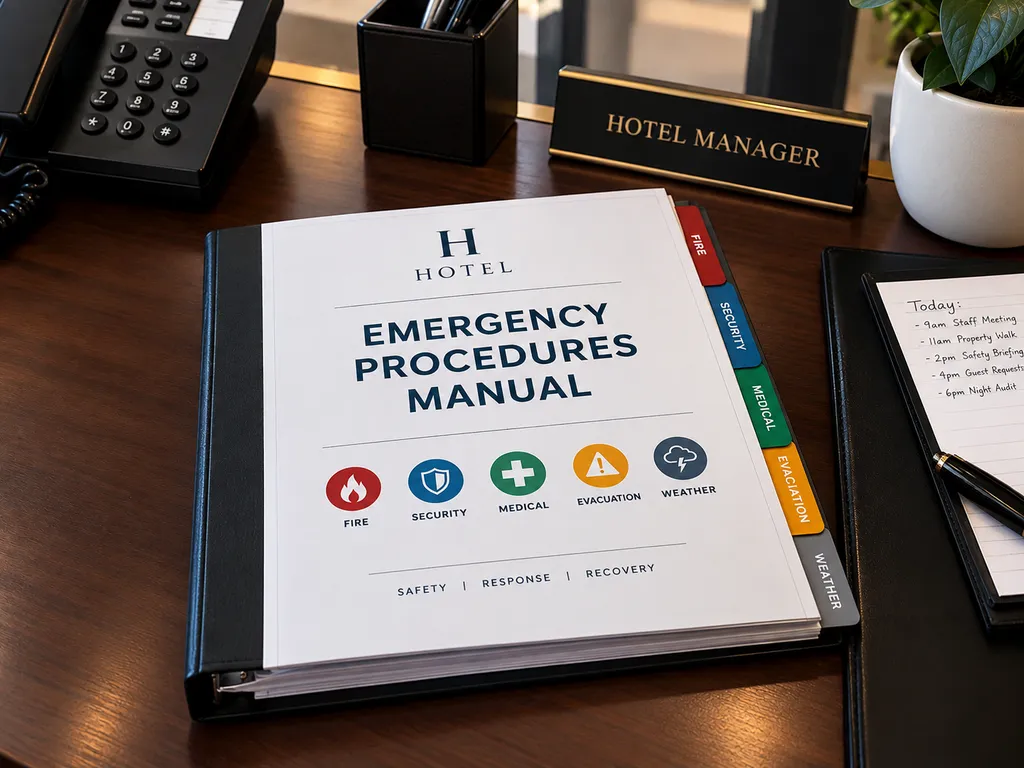
Operational safety failures in hospitality aren't always digital — often they're buried in dense paper policy manuals nobody can find fast enough under pressure. As Lead UX Researcher & Operational Strategist, I applied core UX research methods to physical, not digital, workflows — restructuring emergency procedures into visual, high-cognition task flows that staff could actually use during a real incident.
The Challenge
- Emergency procedures buried in 50-page paper manuals kept in back-of-house offices
- Staff losing critical minutes locating and interpreting multi-step escalation chains during real incidents
- No standardized visual system for hazard response across departments (housekeeping, engineering, front desk)
Approach
- 01
Contextual shadowing — Field studies and direct observation during active shifts across multiple departments.
- 02
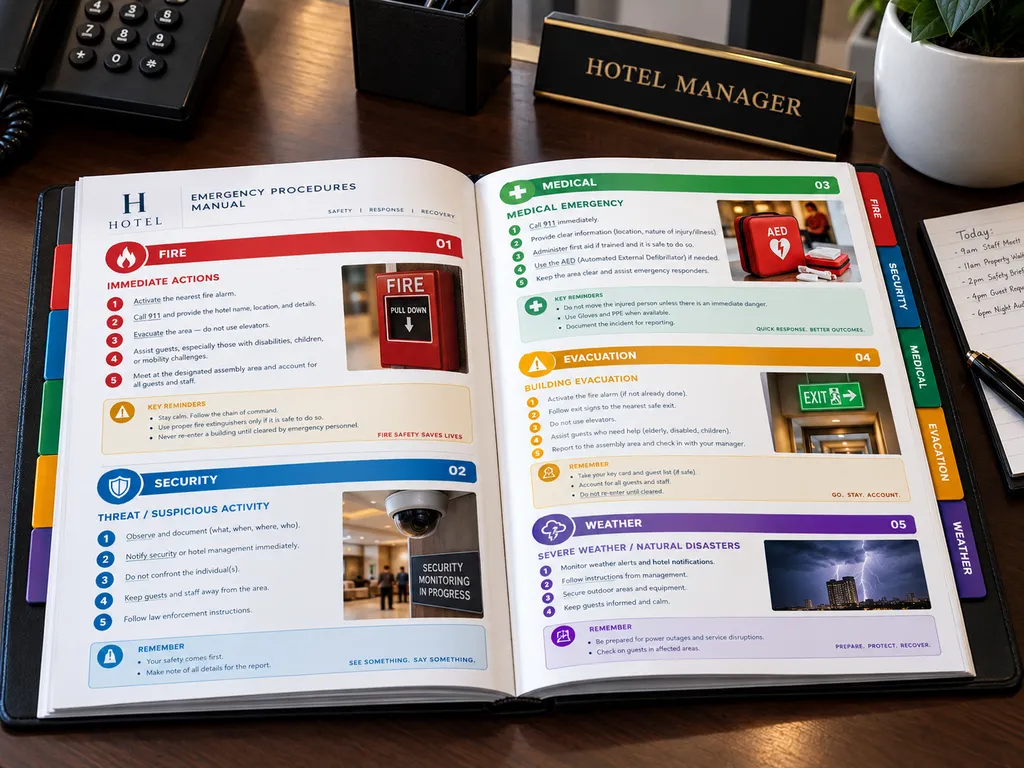
Visual hierarchy & iconography — Standardized high-contrast emergency signifiers to cut reading time.
- 03
Progressive disclosure — Restructured multi-step escalation procedures into step-by-step visual flows showing only the immediate action required.
- 04
System architecture — Built quick-reference visual task flows and digital pitch decks in Figma for rapid deployment at physical shift stations.
Results
By replacing dense policy text with rapid-cognition visual task flows, the redesign turned a slow, error-prone emergency response process into one staff could execute accurately under pressure — proving UX methodology holds up well beyond the screen.
Methodology & Frameworks
Want to dive deeper into the research methodology used in this project? Check out my book, "The Ten Commandments of UX Design," or view my complete background on my Resume.